
Origin · · 6 min read
What is Peruvian maca, really?
A cruciferous root that survives frost, wind and thin air at 4,200 m — and why altitude is the single biggest driver of potency.
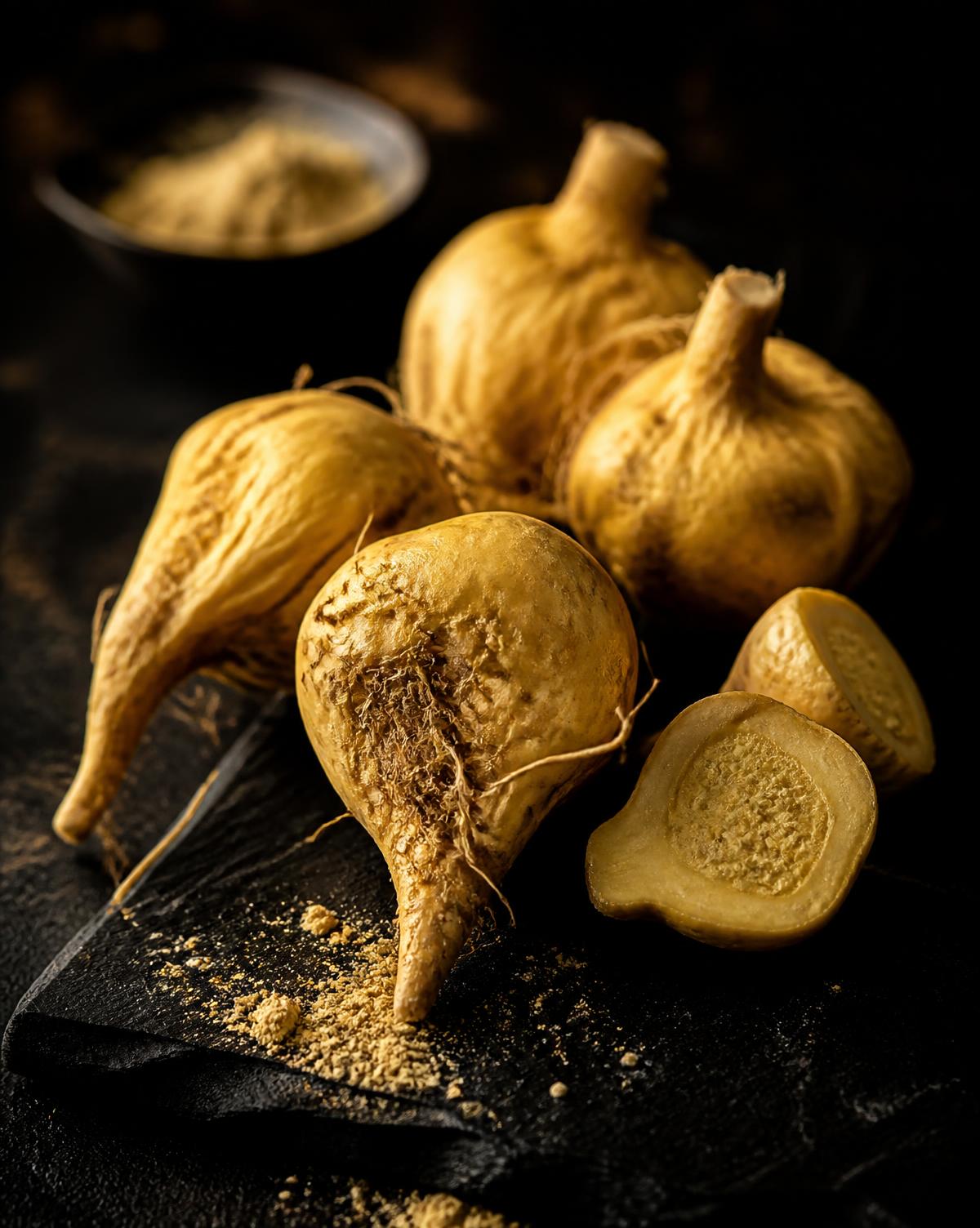
A root built by extremes
Maca (Lepidium meyenii) is a cruciferous root vegetable — a cousin of radish and broccoli — that grows only on the high Andean puna, between 3,800 and 4,500 metres. Nothing else edible grows reliably there: nights fall below freezing, ultraviolet radiation is punishing, and oxygen is roughly 40% thinner than at sea level.
The plant answers those conditions by concentrating defensive compounds in its hypocotyl, the swollen part we harvest. That stress response is exactly what makes maca interesting nutritionally.
Why altitude changes the chemistry
Macamides and glucosinolates — the compounds most often studied in maca — accumulate in higher concentrations when the plant is grown at true puna altitude. Lowland maca looks similar and costs far less, but analyses consistently show a weaker profile.
Our fields sit at 4,200 m in Junín, the historical heartland of maca cultivation, and each harvest is assayed before it is milled.
Colours and what they mean
Yellow maca is the most abundant and the everyday choice. Red maca is prized in studies related to prostate and hormonal comfort. Black maca is the rarest and is most often associated with stamina and focus.
Colour is a phenotype, not a separate species — the roots grow mixed in the same field and are sorted by hand after harvest.
Three years from seed to jar
A maca cycle takes about eight months in the ground, followed by a traditional sun-and-frost drying period that can run several weeks. Fields are then rested for years before replanting, because maca is a heavy feeder.
That slowness is the reason genuine high-altitude maca will never be cheap.